
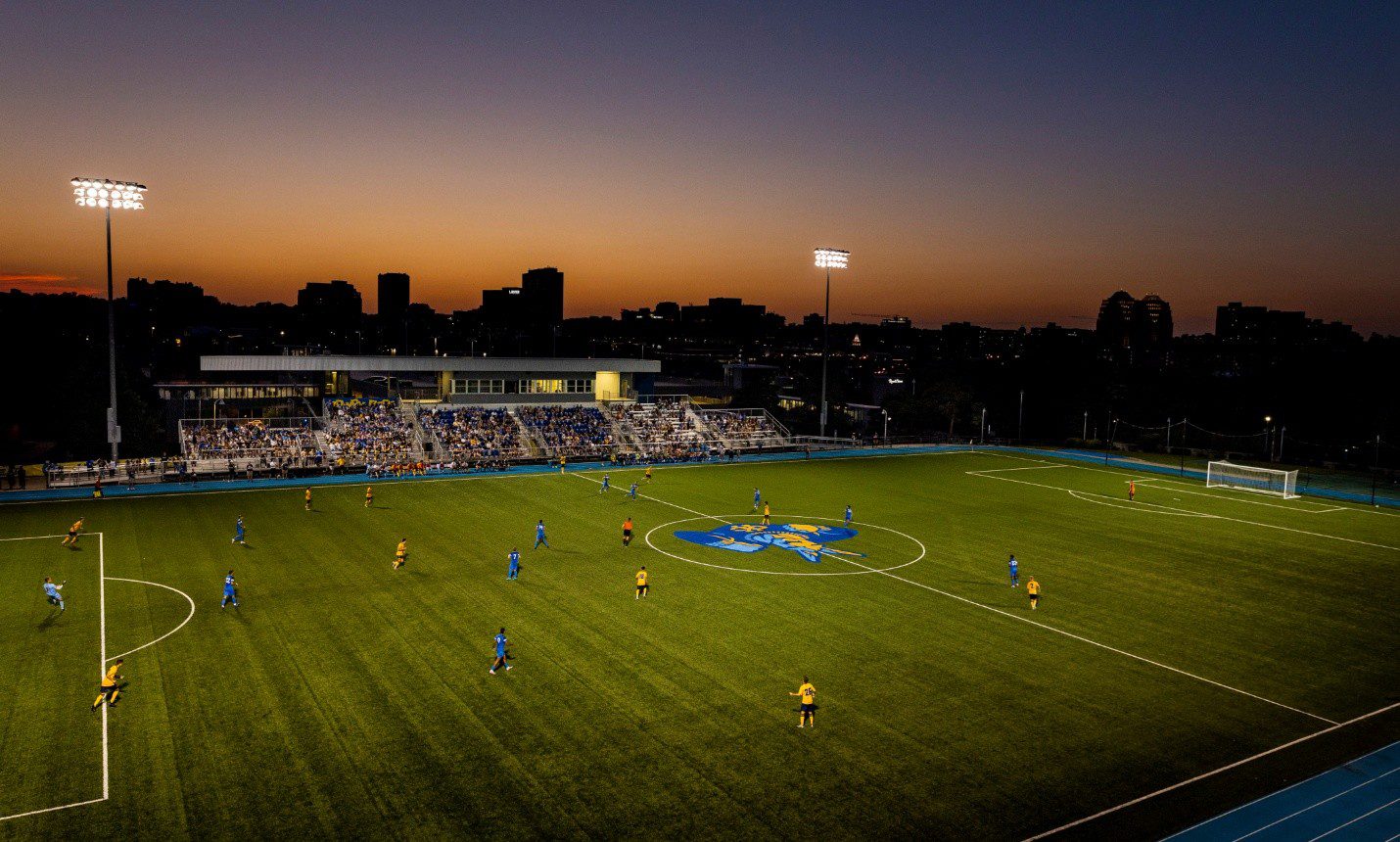
Featured image: Durwood Soccer Stadium, home of the Kansas City Roos. Photo: Brandon Parigo / Kansas City Roos Athletics.
The Kansas City youth soccer community can be pretty small. I first got to know Rafael Martinez (Rafa) as another dad at the soccer field — a handsome Spaniard invested in the same youth soccer journey many of us are navigating. He’s chill on the sideline, with a very sweet family.
Turns out he’s also a successful former player — with school records in season and career points, that is.
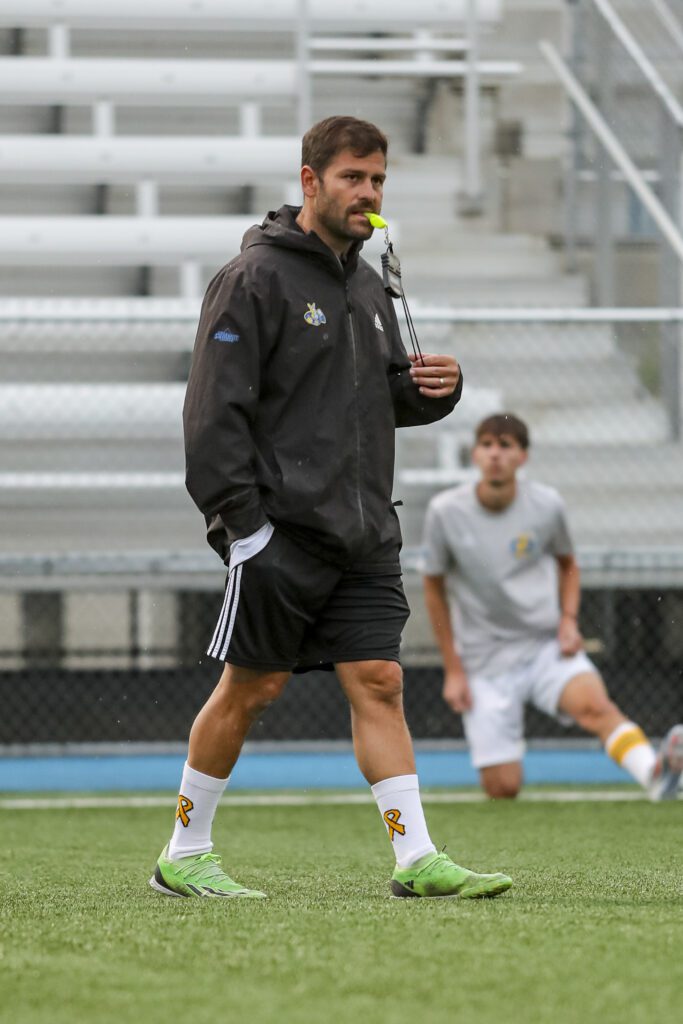
Photo: Ryan Weaver / Kansas City Roos Athletics
And he’s an Associate Head Coach at the University of Missouri-Kansas City (UMKC) with the Division I Kansas City Roos. In 2024, he was named by TopDrawerSoccer as one of 10 “Men’s DI Assistant Coaches to Know.”
The Roos are fresh off an NCAA Men’s Soccer Championship tournament appearance — with a first-round home W — and a Top 25 finish last fall. This followed a 2024 season that ended in the NCAA Tournament Round of 16 with a 3-2 overtime loss to No. 2 seed Pittsburgh.
Coach Martinez also works closely with Sporting Blue Valley MLS NEXT players as an Assistant Coach and College Liaison.
All these perspectives give him a rare vantage point, so I’m really excited about this. He was very supportive of our mission and was kind enough to take some time away from coaching, recruiting travel, parenting, husbanding, etc., to talk with us. We covered college recruiting timelines, KC’s soccer culture, MLS NEXT, the World Cup’s impact, and even sideline parenting.
We’re so lucky to have the Roos right here in KC.
They have a few spring scrimmages coming up at Durwood Soccer Stadium: the Roos face Ottawa and Iowa Western on March 20 (5:30 PM & 8 PM), then Barton CC and MidAmerica Nazarene on April 11 (3 PM & 7 PM).
Catch a spring scrimmage, browse the summer camp schedule, or get to Durwood Soccer Stadium for a Roos match this fall. It’s a great atmosphere — I’ll report back in more detail after my next gameday there. 😊
Q&A with Coach Rafael Martinez
Background
What first inspired you to start coaching soccer?
It was my love for this game. I have always felt a very strong connection with soccer since my youth, so I knew coaching would eventually be part of my life once I stopped playing. I started coaching in Spain while I was still playing, but I made a conscious decision to make it part of my career once I finished my college playing days. Right after graduating, back in 2007, I started coaching part-time at the NJCAA level in Marshalltown CC. After many years combining teaching Physical Education and coaching soccer, I was fortunate to make it as a full-time coach once I got hired by UMKC in 2020.
How do you balance your role as a Division I coach with coaching in MLS NEXT?
After several conversations with Sporting Blue Valley’s directors we came to the conclusion that the best way to combine my busy college schedule while supporting SBV’s mission was through the role of MLS Next Assistant Coach and College Liaison. In that role, I spend most of my time working with the oldest three MLS Next groups (07/08, 09 and 10) but I also get to work with the younger groups through Speed, Agility, and Quickness (SAQ) sessions, an intensive developmental program offered to a wide age range (U13 to U19). It is a challenge at times, but I am glad we found the way, as I truly enjoy my time with all SBV players, regardless of their age group.
High School → College Recruiting
At what age should players realistically start thinking about college soccer?
I would say that between your freshman and sophomore years of high school, there should be a focused attempt to consider your future as a player and as a student. This is usually the moment when personalities develop more strongly and priorities become more clear, so it is important to figure out where soccer fits.
Another aspect to consider is that physical maturity and skill development can now be more accurately assessed and compared with peers. The key to me is that this is a moment to prioritize where to invest my time and effort if I am indeed interested in competing for a spot on a college team.
From your perspective, what truly separates high-level college players from the rest?
There are always going to be some aspects that separate some players from the rest at every level. In particular, in soccer we tend to assess players in their technical ability, tactical understanding of the game, physical capacities and mentality.
But at the highest level of any sport, you will find that the top performers tend to have developed habits that create the conditions for consistent performances — not just intermittent production. Some examples can be nutrition, proper sleep, game preparation, pre-game imagery, etc.
Do MLS NEXT kids normally play high school? Why or why not?
My understanding is that the decision is usually not made by the player but by the tier in which the player competes with his MLS Next team. Players competing for a homegrown MLS Next team do not play for their high school team also, since their time commitment is all year around (Sporting Kansas City teams for example).
The Academy MLS Next level (or tier 2) in which the two local teams — Sporting Blue Valley and Sporting City — compete, allow for high school participation of their players.
At the top college level (for example, top-25 programs), how would you describe the balance between international players and those who grew up playing in the U.S.? Do you see that balance changing? Is it similar at smaller programs?
Soccer is the most popular sport in the world with billions of fans therefore you’re going to find that it is played all over the world. This means that coaches are going to have an incredible pool of talent available — much more diverse than other sports played in college these days.
That said, I think it is crucial to have a balance between local and domestic players that develop within our system in conjunction with internationals that can bring a diverse approach to the competition. We, at UMKC, pride ourselves in having such balance, not only on the roster, but in the starting lineup.
Local players like Brevyn Cole, Wesley Cribbs or Bryson Gosch have started multiple NCAA Tournament matches for the Roos, something I know is noticed by many youngsters in the KC Metro area. But I also enjoy knowing that student-athletes from countries like France, Spain or Italy can join our program and become wonderful additions to both the soccer team and our community.
Each program has to find what makes the most sense for their team, campus and community while navigating the challenges they face in competition and available pool of players. We are very fortunate to have such a good habitat for soccer players in the KC Metro area, and as the father of two local club players, I hope they will have an opportunity to be seen and evaluated for a possible opportunity to compete in college soccer, should that be a goal of theirs as it currently seems to be.
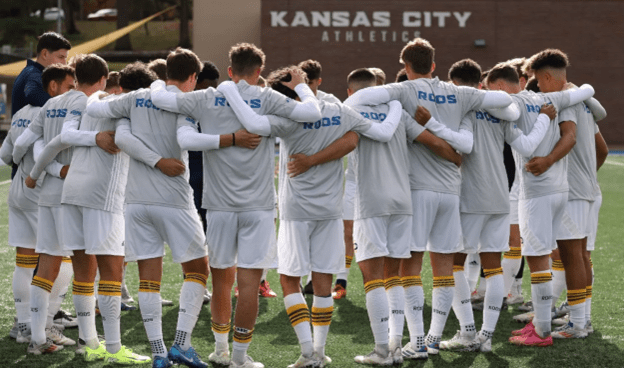
Photo: Ryan Weaver / Kansas City Roos Athletics
Advice for Players & Parents
What advice would you give to a 14–16-year-old player who dreams of making their next step?
The first thing I would recommend is to invest a couple of weekends in watching college soccer games at different levels to better understand what the game is like in college. My next advice would be to communicate with their club and/or high school coaches and request a realistic evaluation of their abilities in comparison to past players that those coaches may have interacted with who made it to college, including the junior college level, NAIA and all three NCAA divisions. Once the player has all this information, he or she may develop a plan to close the gap and become a better prospect for college without losing focus on other important priorities in their lives like family, school and friendships. After the plan is created, it’s time to put in the work, knowing that they are competing with many other players who want the same.
What advice would you give to parents navigating the pathways with their child?
I think it’s important to seek information that is available, including published articles and interviews of club college liaisons, former players and college coaches. After collecting this information, it’s important to have an honest conversation within the family in what is required to become a possible college player prospect and whether the family is able and willing to go through the process, which includes financial investments, weekend priorities, etc.
Lastly, just like in the process for the player to determine if college soccer is for him or herself, it is important as a family to seek advice from club and school coaches, as they are able to provide feedback related to what college coaches would need to see consistently from the player in order to reach the level. Once that is in place, I would also recommend visiting campuses and initiating conversations with coaches to hear what they look for specific to their program. There are many great options locally, including UMKC of course, so that would be a good area to start with, as it won’t require a big investment traveling.
What about kids who aren’t at the highest level with their club but want to get there. Any success stories of kids who made a later jump through growth, hard work, opportunity, etc.?
Absolutely! In soccer, just like in many other sports, there are many examples of athletes that experienced a boost in their ability in a short period of time. While some of those stories are often explained by the almost miraculous effects of puberty, no real change can be achieved unless it is accompanied by an increased commitment to the development of the four soccer pillars: technique, tactics, physicality, and mentality. Sitting at home while waiting for puberty to take care of the gap between one and his or her peers at a more competitive environment is not the recommended approach to re-creating those success stories.
Kansas City Youth Soccer & Local Development
What makes KC a unique or underrated market for producing high-quality players?
Since my arrival to this community, I have felt the level of pride that Kansas City residents feel for their teams, whether that is at the Pro, College or Youth levels. This is also evident by the creation and development of top-level clubs and the organization of highly competitive leagues and tournaments that take place in our community. The opportunity that our players have in competing against other high-level clubs (both local and not) right here in Kansas City is making a difference in producing both professional and top college male and female players. When I interact with other D1 coaches from across the country, it is evident to me that KC’s soccer community is highly respected and scouted for the top level.
How can the local soccer community better support youth players and coaches?
I think there’s still room for improvement in building and cultivating the relationship between youth and college soccer. We have an incredible amount of top college programs from all different divisions in this community, and the interaction between all parties will only provide more opportunities and experiences to those who love this amazing sport, including participants, coaches and spectators. We, at UMKC, are seeking ways to deepen our connection with the community at either side of the State Line, and will welcome any initiatives we, coaches and players, can be part of in order to make it happen. [Part of this touches on something the socKCer Team hopes to explore more deeply in the future — breaking down the different college pathways available in Kansas City and the region, from Division I to junior college -KC]
What excites you most about the future of soccer in Kansas City?
I look forward to seeing the effects that the World Cup will have in this community. Not only will we be able to host 6 matches but the fact that so many national teams have chosen Kansas City as their “home” during the tournament will undoubtedly create a momentum that everyone that is involved in the sport will feel. I am excited for both the short-term excitement but also for the effects the tournament will have in a generation of young players witnessing the elite of the sport in our own backyard.
Kansas City Roos
I think we’re so lucky to have such a great program (men’s and women’s) nearby. How was the atmosphere for the NCAA Men’s Soccer Championship tournament game win? Is that support growing?
Yes, being part of the first ever home NCAA Tournament event at UMKC and getting the W against a very good Lindenwood program was very special. In 2024 we played all our three Tournament matches away so we didn’t fully understand the amount of work that our support staff and admin had to go through in order to make it happen, and it turned into the biggest crowd we had seen at Durwood, so their hard work definitely paid off. That has now become the standard we must work towards, not only earning the opportunity to host an NCAA Tournament home game again, but to also increase the visibility of our program so that more people in the community seek to be part of it, even during the regular season games, which includes teams that made the NCAA Tournament last year.
Is it the same for the women’s team games? Do the teams/programs enjoy supporting each other?
UMKC is a large institution that offers great opportunities to many people however the athletic department feels like a smaller family in which student-athletes support each other in their events. We are very proud to hear from other coaches that soccer players regularly attend and support (very loudly) other sports in their home events. As a former student-athlete, I think that is a very special part of college athletics and a critical aspect of developing and demonstrating love and loyalty for your colors.
Any chance of playing a game at Scheel’s 😊 And/or of bringing back a game against Rockhurst? (I see the women played them this year (a 7-0 win 😊))
We are very fortunate to have a very nice soccer stadium so we want our community to enjoy a high level D1 game at a high level facility like Durwood. Having said that, there may be other ways of bringing Kansas City’s D1 College Team to the local club scene, maybe through Camp and Clinic opportunities; we definitely want to strengthen the connection between local clubs and our team.
In relation to the match against Rockhurst, it has become more difficult to coordinate our schedules due to the differences between D1 and D2’s season dates. We greatly respect the success they had last year, a roster by the way that included some former Roos, and their coaching staff has always been very connected to us; so we look forward to maintaining that local tradition, when possible.
Why should KC youth players attend local college or professional matches? I’m thinking for inspiration, learning, and to support the community?
I think that the first reason is that they usually are very fun and entertaining matches, since both the Pro and D1 games tend to stay close until the last whistle. Besides that, as I have mentioned before, they can serve local players to assess what the next level looks and feels like, so they can educate themselves on whether it is something they want to work towards or not. Ultimately, for those whose objective is, indeed, to play at the next level, watching high level performers can help visualize what they need to work towards in order to achieve excellence in their sport. The consequence of all this… the Roos feel the support and perform at their peak, so we all win.
Random!
Have you had a chance to formally coach your own kids? How does that work out? 😊
Only in situations in which their actual coach could not attend due to a conflict and needed someone to cover. I will say that it’s a lot more stressful sitting on the bench while they’re playing than watching from the opposite sideline. That said, I have been fortunate enough to share some victories with them, which resulted in great memories with my children while subbing for their coach during league and even tournament games.
I remember one of your sons had a simple, small “celebration” after he scored, which I think was maybe an ode to a grandfather. Can you tell me a little more about that?
Yes, my late father, who most of his life rocked a mustache, always attended my games while I played in Spain, so when I introduced my children to soccer, he always enjoyed hearing about and watching videos of them playing here in the States. My children decided that the best way to honor him and let him know that he was always present in their minds during the games, was to pretend to have a mustache themselves during their goal celebration. This is something, as you can imagine, that has always been very emotional and appreciated by me, and I know how much it meant to him.
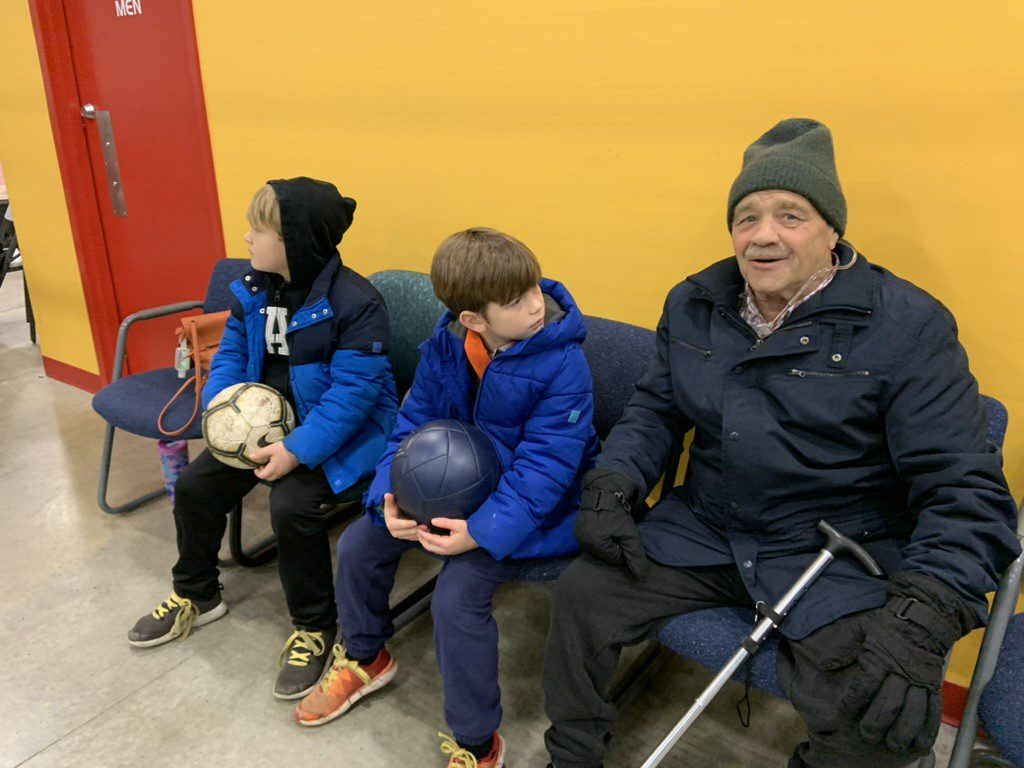
So, you’ve been on both sides of the field. Any advice for parents on the sidelines? 😊
I can only say what works for me which is to sit on a rocking chair and try to relax while they are the ones playing the game. As a soccer enthusiast, it isn’t always easy to stay quiet and not let my emotions show, but I do think it is important that my children get to focus on their own performance and enjoy the beautiful game without me distracting them with my comments. I also try not to bring up the game during the car ride home, but if they do ask, I answer with honesty and focus on their decisions more than on their actions or anyone else’s.
Granted, soccer is not everything . . . but is there anything soccer-specific, either playing or coaching (or parenting 😊), that you’re most proud of?
Soccer started as a game that I played with friends and has become an important part of who I am and the experiences that I have lived. It has influenced my character and personality, it has initiated most of my lifelong friendships, and has even been a critical part of where my family and I call home. The fact that a simple game has shaped who I am is something of pride, as I believe this game connects people in the world in a way that not many other aspects do.
Who’s your favorite current/recent professional team or player?
The older I get the more I appreciate the game in itself and the less I focus on a particular club, but I did grow up and still maintain a more intense connection with the professional team of my hometown, Cordoba CF (which is usually in the second division in Spain) and the king of the European Champions League- Real Madrid.
Then these days I tend to pay more attention to team dynamics and strategies, but growing up I certainly focused on individual players who were able to dominate the games with their technique and vision — Michael Laudrup, Zinedine Zidane and Andres Iniesta are some examples.
How’s Spain looking for the World Cup? The US?
I think Spain is an exciting team that plays beautiful and successful soccer. The roster itself is very strong, and there are also some very crafty individual players like Lamine Yamal or Nico Williams so I hope they have a good performance this coming summer. The US has an incredible opportunity to reach a broader fan base at home so I hope we can see the success on the field. I think Group D is pretty even in terms of quality of the teams so I am optimistic about the chances of advancing through. Once you are in the knockout stages, anything can happen!
Do you have any pets? Can we have a picture?
No pets! I grew up with dogs but we don’t currently have one. [The coaches profiled so far are a disappointing 0-2 here -KC]
What do you enjoy outside of soccer?
It is hard to find anything outside of soccer because, if it isn’t with UMKC, it may be with SBV, or it might be our family going to watch one of my children playing. We do enjoy spending time outside, including fishing and going to the park, but we also watch a lot of sports on TV, especially Football.
Excuse me while I talk to my kids about the importance of nutrition and sleeping! 😊
Seriously though, thanks Coach Martinez for this reminder. Development isn’t just about talent — it’s about habits, community, perspective, and long-term vision.
I especially appreciated his point about not losing focus on other important priorities like family, school, and friendships.
Kansas City has become one of the strongest soccer communities in the US, with youth clubs, college programs, and professional teams all contributing to the city’s growing soccer culture. As Kansas City prepares to host matches during the 2026 World Cup, the next generation of Kansas City youth soccer players is already watching, learning, and building toward their own goals.
And again — get out to watch and learn from the Roos!
Put the KC in soccer.
-KC
P.S. We’ve featured Coach Profile: Mark Smith (Sporting Blue Valley) and Player Profile: Breanna Hays (Sporting Blue Valley ECNL 2010) so far — both with ties to Sporting Blue Valley
Help us branch out!
Have a blog idea, resource, or event or update related to the local youth soccer community? Email team@socKCer.com.
Looking for more Kansas City youth soccer resources? Visit our Kansas City Youth Soccer Resources page.
